Welcome





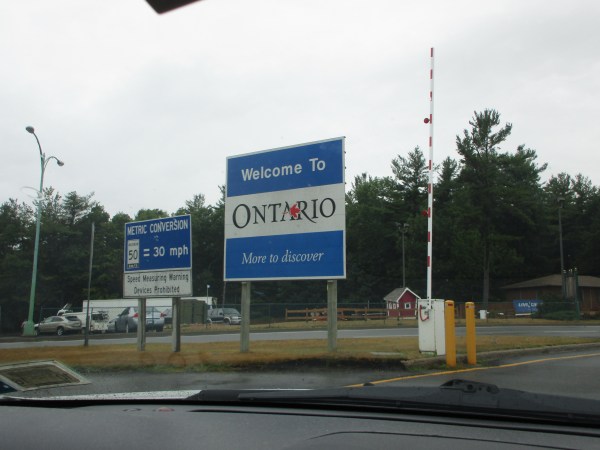

Take Philip Schuyler: The Man Is Loaded …
Friday was the last day of our trip, but before going home we had a couple of important stops to make.
We started our collection of state capitol buildings quite accidentally. The first two or three we happened to pass by while touring the city, but once we saw a few we decided we should always stop by the capitol every time we were in a capital city. We’ve probably been to somewhere around 30 now. Iowa’s is easily the ugliest, Utah’s is the most surprisingly large, and a few of them (Boston and Vermont come to mind) truly fit their home state. But we had never been to our own state capital, which is roughly a three-hour drive from home. Until today.
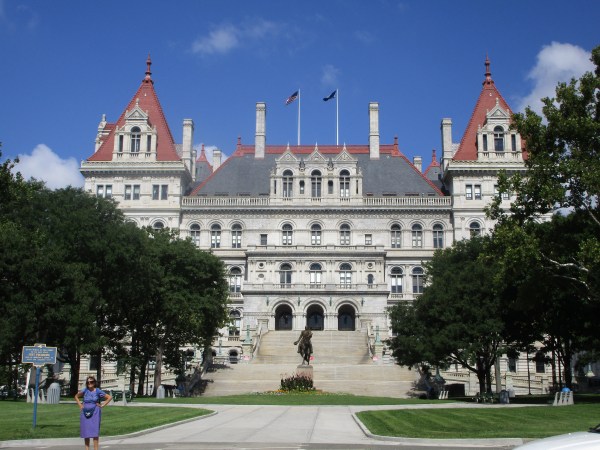
We were both surprised by New York’s capitol building. It’s huge and gorgeous and stately, but, unlike the vast majority of capitol buildings we’ve seen, there’s no dome. The architecture is more Dutch than British or French, which makes sense considering that it was the Dutch who first settled New York City and most of the rest of the state.
I know I’m biased, but I honestly think that New York’s capitol is the most beautiful of all the ones we’ve seen.
With that out of the way, we had only one place left to go, and it was something Sam’s been excited for since I first told him about it a month ago: the mansion where Revolutionary War general and New York Senator Philip Schuyler lived.
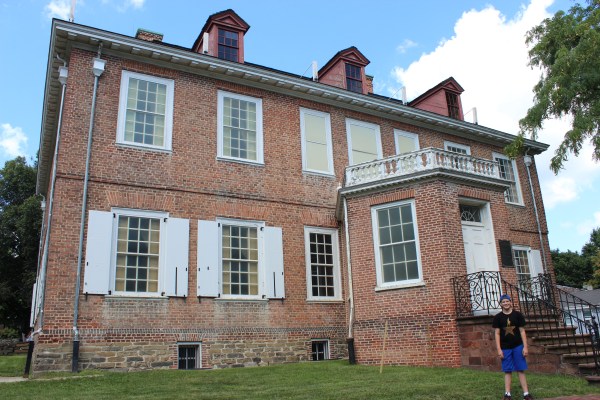
Schuyler’s current claim to fame, and the reason Sam was so excited to take a guided tour of a historic pre-Revolution brick house, is that he is mentioned repeatedly in the musical Hamilton as the father of Alexander Hamilton’s wife Elizabeth and her sisters. In fact, Alexander and Elizabeth were married here and lived here for a few years immediately following the war.
Sam has been absolutely obsessed with Hamilton ever since I bought the show’s soundtrack last year and started playing it in the car while I took him or his sister on errands. Eventually my wife and I took them to see the show in June, and that only cemented his affection for all things Hamilton. He knows every word to every song, he knows everything about every actor in the show, and he uses just about any sentence in his presence as an excuse to quote lyrics. It was endearing at first but it’s become so annoying that we’ve put a few temporary bans on any mention of Hamilton just so that he can breathe for a second or two.
I’ve always been a history buff, especially American history, so I knew a fair amount of Hamilton’s story before the show ever came out. As a writer and English teacher, and a fan of hip-hop, I love what playwright Lin-Manuel Miranda did with the story, and I, too, can sing most of the soundtrack by heart.
Needless to say, we loved the tour. The tour is very heavy on the history of the extended family and would have been monstrously boring for both of us if we didn’t care so much about all the characters. The house is beautifully ornate (Schuyler was indeed loaded, as the song says, and owned huge tracts of land throughout the state, as did his wife’s even richer family) but nowhere near as impressive as some of the other mansions we’ve toured on various road trips–especially coming just days after visiting Casa Loma. I do want to show you the wallpaper, though.

Family room
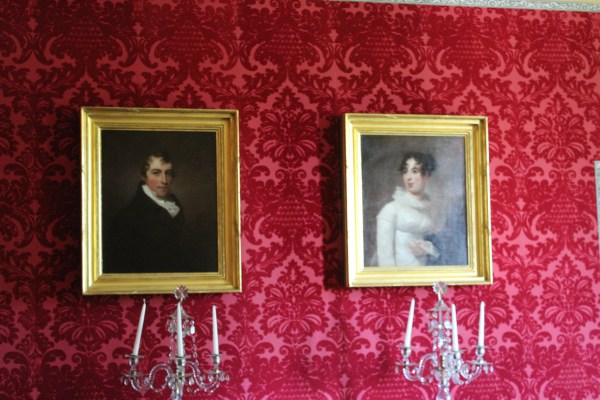
Dining room
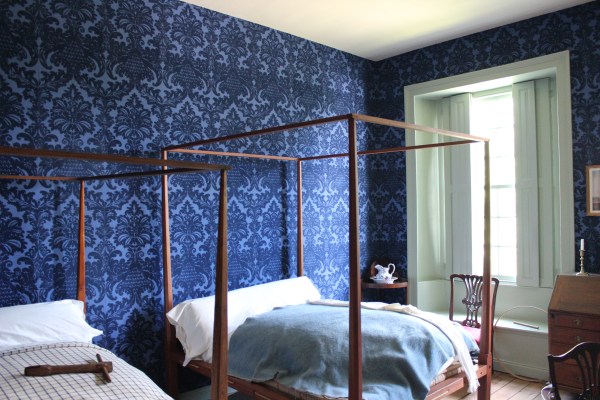
Boys’ bedroom
I should mention that the wallpaper is not merely intricately detailed, it’s also multidimensional, with the darker parts being raised and made of a material that has a felt-like texture. Here’s a close-up of the dining room so you can better see what I mean:

We learned all sorts of interesting background about the Schuyler sisters and the rest of the brood. For example, the three sisters featured in the musical were the oldest of eight surviving Schuyler children, with another seven dying as babies.
When, as the song says, the Schuyler sisters stole into the city just to watch all the guys at work, it was relatively easy for them to do so, as the Schuyler mansion was directly on the Hudson River. But it still took about a week to sail down the Hudson to New York City, so Philips definitely would have noticed they were gone.
Angelica, the eldest, did marry a British man as the show mentions, but what it doesn’t mention is that he was in America under an alias due to extensive debts he owed in England and France, and Philip disapproved of their union and kicked Angelica out of the house, so they eloped. The husband ended up getting rich by selling supplies to both armies during the Revolution, and lived with Angelica in France for a while to settle his debts. It was there that she met and befriended Thomas Jefferson, sharing Hamilton’s writings with Jefferson and vice versa.
And Elizabeth’s younger sister, Peggy, was actually named Margaret (Peggy was her nickname), and one of the reasons we hear so little about her in the musical is that she died relatively young, at 42.
We were excited to see Schuyler’s study/library, where he kept a massive library that included a suite of legal volumes not found even in public libraries. As such, Hamilton and Aaron Burr both used the Schuyler library to study for the New York Bar Exam before going into politics.
The room we really came to see, though, was the parlor just to the left of the entryway when you first walk into the house. It’s the room where Alexander and Elizabeth got married (at Schuyler’s insistence), which was especially exciting because there’s a scene and a couple of songs in the show that take place at the wedding.
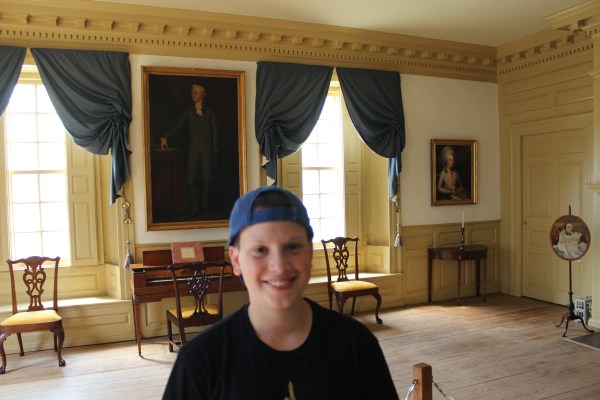
The large portrait between the windows is of Hamilton, and the smaller one to the right is Elizabeth
In this room, the tour guide talked about how Elizabeth and Alexander met, but we already knew the whole story–it’s in a song, after all.
So yes, we were in the room where it happened. And we were was satisfied.
Montreal is Closed
It’s our last night on the road, and I’m too tired to write. So the Hamster and I explain our day on video instead (with a handful of photos below). Enjoy!
Part I:
Part II:
Part III:
Photos:
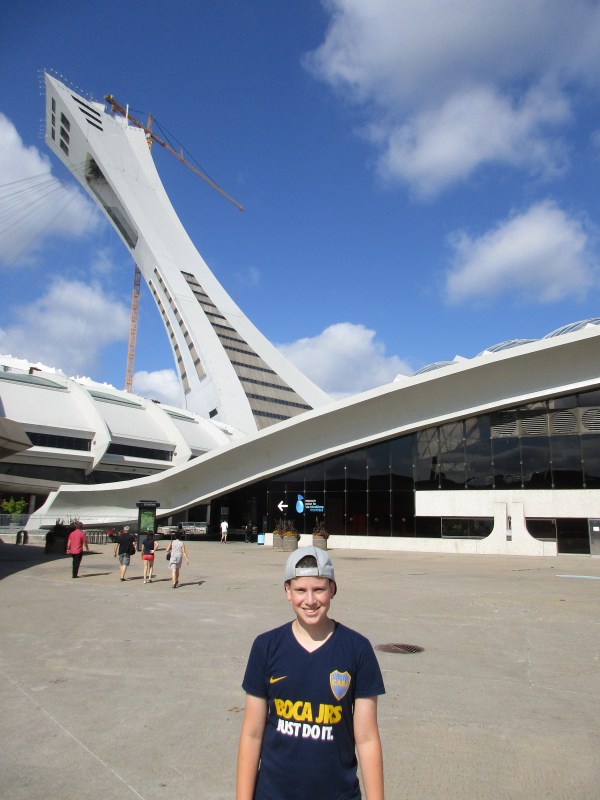
The Biodome, with Montreal Tower in the background
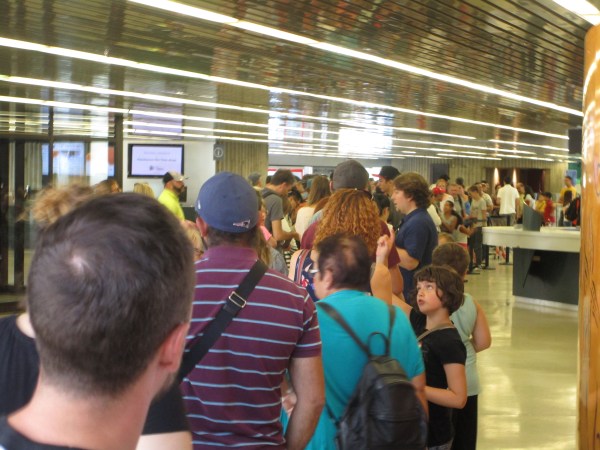
A fraction of the line inside just to buy tickets


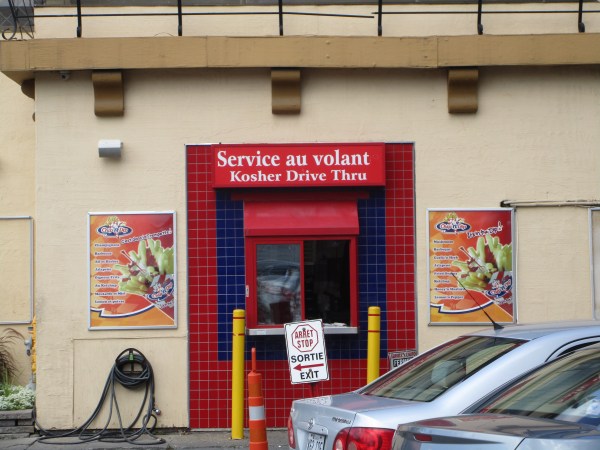
I had never before seen a kosher restaurant with a drive-through window.
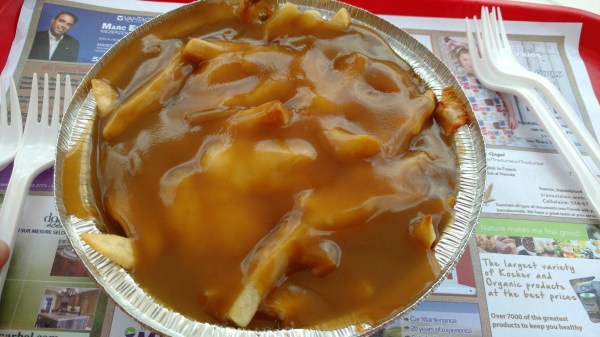
Poutine!

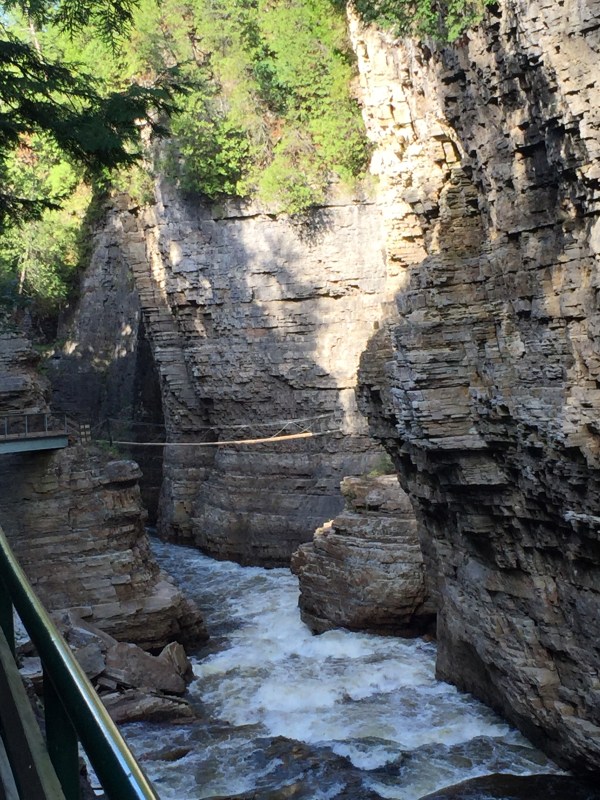
Ausable Chasm

The view from our raft

The Hamster and the highway and the somehow intact iPhone
Wednesday was so packed with so many interesting experiences that I hardly know where to begin. We explored Ottawa, we began exploring Montreal, and I have no idea what to call the incident with the dog on the highway.
Let’s go chronologically. After almost a week of cloud cover that occasionally included torrential rain, we woke up this morning to bright sun and mostly clear skies. We had hoped to take advantage of the (finally) excellent weather by renting bikes from Ottawa’s bike sharing program, but they make you pay for the app before they make you pay more just to find out the locations of the bikes, and we didn’t manage to find any locations on our own.
Luckily, everything we wanted to see was pretty close together, so walking was a good plan B. It took several attempts to find a suitable place to park the car, but eventually we found a convenient (if pricey) lot and explored Ottawa on foot.
Byward Market encompasses several blocks of the neighborhood that shares its name. The market includes a bunch of restaurants, bars, and souvenir shops, as well as lots of outdoor stalls selling jewelry, trinkets, and farm-fresh produce. Most exciting to us was the produce, as we were completely out of vegetables, and everything in every stall looked fantastic.
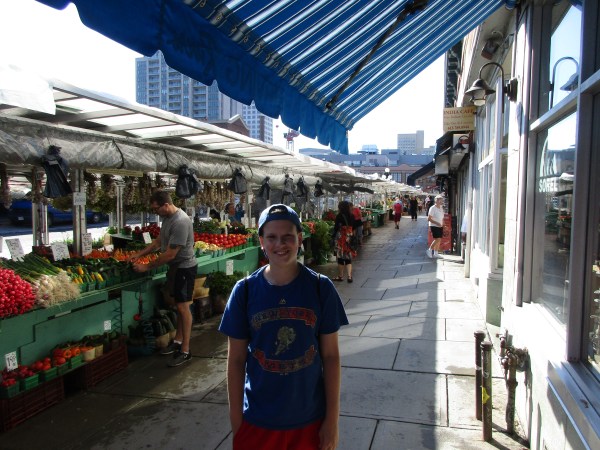
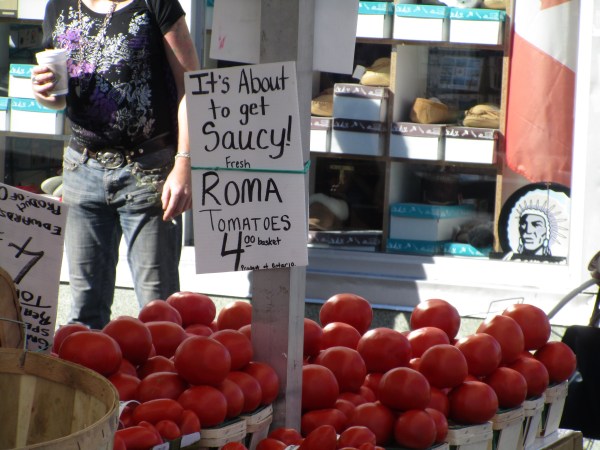
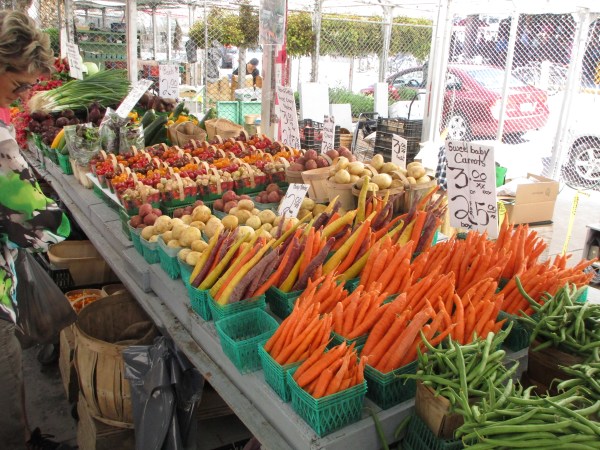
For five Canadian dollars I bought a basket of Kirby cucumbers and a basket of tiny sweet carrots. The woman running the stall washed them for us, and we dug in right away. They were the freshest, most delicious cucumbers I’ve ever tasted. Hands down, the best purchase of the trip.
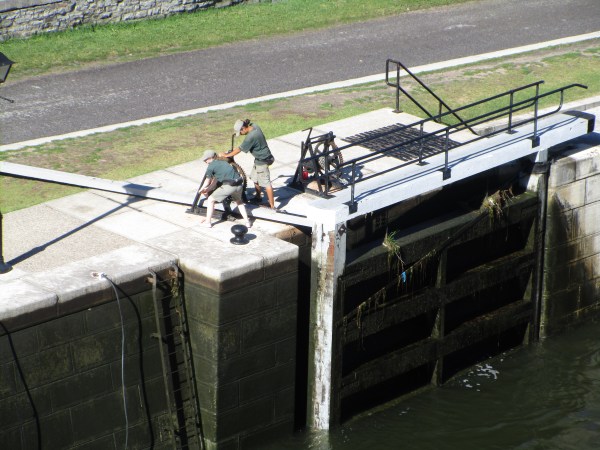
Just a few blocks away is the lock system for the Rideau Canal, which connects the Ottawa River to Lake Ontario. Since I was a kid I have always been fascinated by canals, so Sam and I happily watched as canal employees operated the locks to allow a few private boats to pass through.
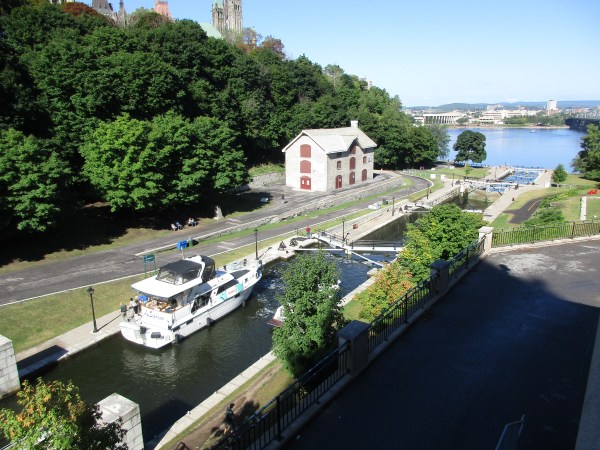


Then we heard the music. We weren’t sure what it was at first, and then everyone started running back up to the street to see it. We figured out that there was some sort of parade going on, so we followed the crowd to go take a look. It turned out that it wasn’t a parade exactly–it was the beginning of the changing of the guard on Parliament Hill.
Ottawa is Canada’s capital, and the three Parliament buildings sit on a massive lawn right next to the canal. I had read somewhere that they have a ceremonial changing of the guard similar to the world-famous one at Buckingham Palace, but I forgot to check on the exact timing in order to coordinate our visit. Not only did we end up in the right place at the right time quite by accident, but our accidental timing gave us a better view than many people who had shown up intentionally early just to get a good spot.
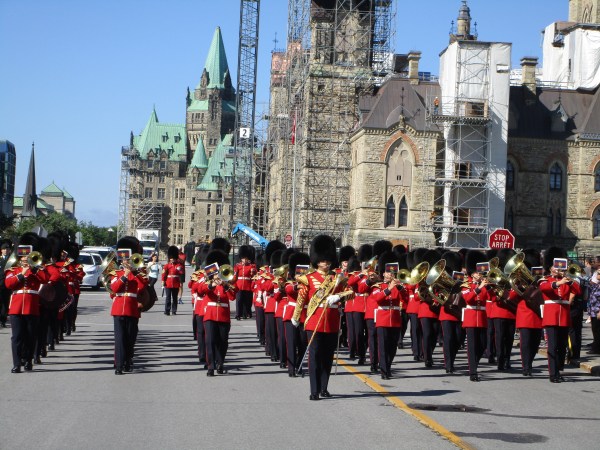
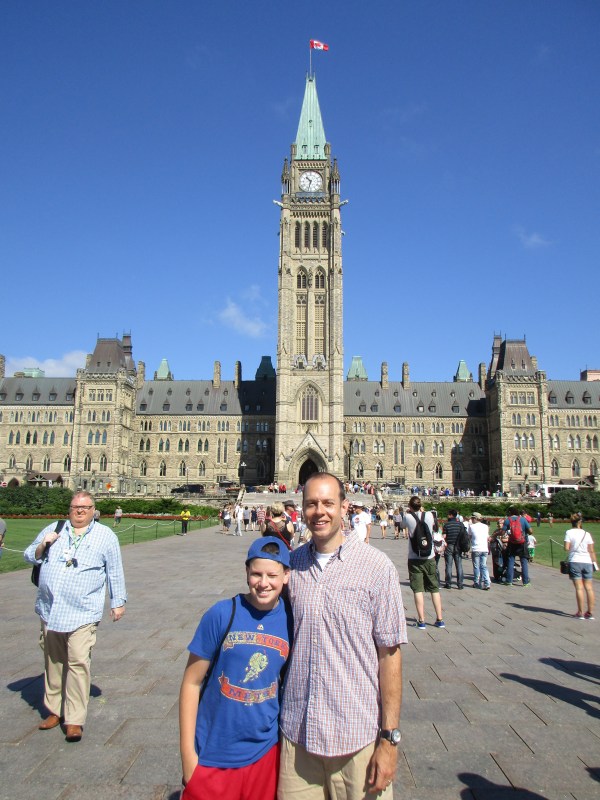
The Parliament building is extraordinary–a stunning example of gothic architecture at its finest–and the ceremony was very entertaining.
My favorite part was when the commander of the new guard inspected everyone’s weapon one by one by looking right down the barrel of each rifle, kind of like when Daffy Duck peers into his shotgun to find out why it’s not firing, only to have his beak immediately blown off.
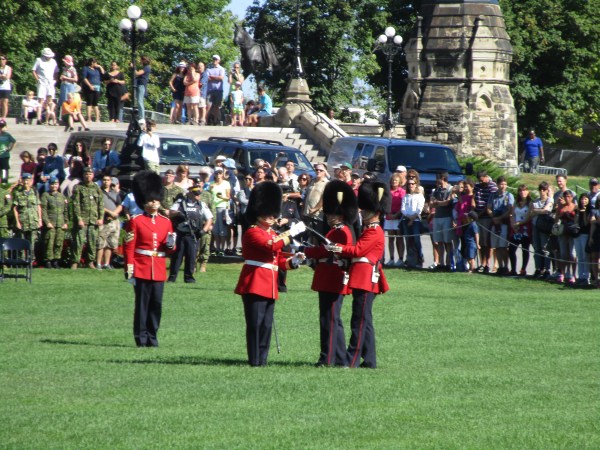

As the ceremony ended and the old guards and their band marched away, we got a great viewing spot once again.
By this time it was getting pretty hot out, and the ceremony had dragged on for about 45 minutes, so even though I was completely energized by our good fortune, Sam was a little worn out. That was bad news, because it was time for our longest walk of all: down to the bottom of the canal and over Alexandra Bridge.
The bridge itself–a cantilevered steel bridge that spans the Ottawa River and connects Ontario to Quebec–is nothing special, visually. But a walk over it provides incredible panoramic views of Ottawa, as well as Gatineau, Quebec (the city on the other side). The scenery is pretty fantastic no matter where you look.

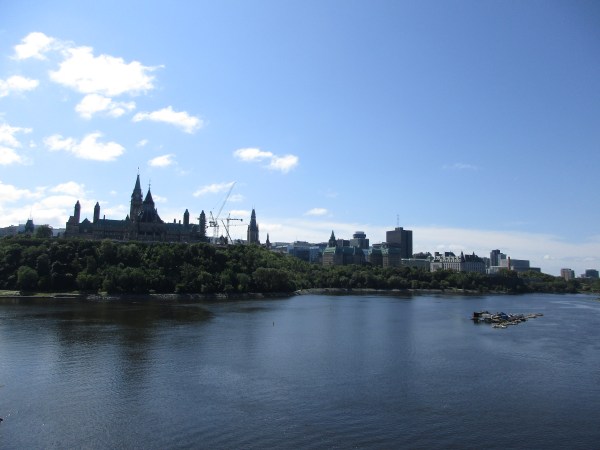


And of course, in the middle of the bridge you can stand in both provinces at once. So we did.

Ottawa is also known for its many wonderful museums, but Sam has little interest in fine art or Canadian history, so we declared ourselves to be finished with Ottawa and walked back to the car to start the two-hour drive to Montreal. And it wasn’t even noon yet!
Our drives on Canada’s highways have been rather uneventful, but that changed drastically in one of the strangest moments in the history of our road trips.
For most of the stretch between Ottawa and Montreal, the highway is bordered on both sides by woods.

We were driving along at around 115 km/h (roughly 70 mph), and suddenly I saw something dart out onto the highway from the left side. It was a medium brown color, and for a nanosecond I thought it was a deer, but it was small for a deer, and it was running, not leaping like a deer does. For another nanosecond I thought maybe it was a squirrel. Either way I had absolutely no time to react. It was headed straight at our car, almost as if it was trying to run into us. As it got closer I realized with horror that it was a dog, and that I was definitely going to hit it. I was going pretty fast, and there were several cars right behind me, so slamming on the brakes would likely have made things even worse. And it was coming at my from the side, so swerving wouldn’t have helped me avoid hitting it. But everything happened so quickly that long before I got anywhere near finishing any of these thoughts, I heard the thud.
Instinctively I checked the rearview mirror, terrified. But what I saw completely amazed me: the dog looked unhurt, and changed direction twice in the blink of an eye, finally running off the road and into the woods on the right side.
The entire thing had taken two, maybe three seconds by this point. My brain was on overload trying to process everything and the resulting emotions. I was relieved, I was confused, I was concerned for the dog, and I felt deeply, deeply guilty
Sam and I were both pretty freaked out by the whole thing. Sam wondered if we should have stopped to check on the dog, but the dog disappeared into the woods so quickly that I’m sure we wouldn’t have found him. We shut off the music and just talked it through for a while, trying to figure out whether there was anything I could have done differently, and wondering how the dog was doing and how it survived the collision.
I didn’t actually see the dog hit the car (or the car hit the dog), but one thing I’m sure of is that he hit the side of the car, not the front end. My best guess was that the dog either ran into my door and bounced off relatively unharmed, or maybe it somehow used my door to push off and change direction.
A little later we stopped for lunch, and sure enough there were scratches (not dents) in my door.

The deep scratch high up on the door is the one that really confuses me, and makes me think that it might be from the dog’s hind paws jumping onto and pushing off of the door. I’m still not really sure what happened. I’m just glad I didn’t kill that dog.
Throughout the trip Sam and I have been seeing a fair amount of roadkill–mainly squirrels, raccoons, and deer. We had never come very close to hitting any animals ourselves, so we’ve been wondering how such a thing happens, especially in broad daylight. Now we know. I always take “deer crossing” signs seriously, but I’m going to be even more careful now.
Eventually we made it to Montreal. I was originally expecting to arrive somewhere around 6 p.m., and thus do only one thing besides getting dinner, leaving the rest for tomorrow. But we got into town at around 2:30, so we had plenty of time to shift our itinerary.
I was in Montreal once before–17 years ago, almost to the day. I had an awful time. It wasn’t Montreal’s fault, really: the weather was stiflingly hot and humid, my wife and I had an eight-week-old infant in tow who barely stopped crying all weekend, and we stayed in a bug-infested house that was so close to freight train tracks that it shook every time a train passed. So I don’t feel like I’ve really seen Montreal, and I’ve been looking forward to this opportunity for a do-over. The beautiful weather was a good start.
We started with a slow, meandering drive through Westmount, a residential neighborhood known for its windy, hilly streets and charming houses. It turned out to be a perfect introduction to the city.
Toronto feels like a smaller, cleaner version of New York or Chicago. Ottawa feels a lot like a less-populated, greener London. Montreal is Little Paris. This is largely due to the language; in the other cities, signs are in both French and English, but in Montreal there’s little English to be found. Everyone speaks with a French accent, and even KFC is French here–it’s called PFK (chicken = poulets).
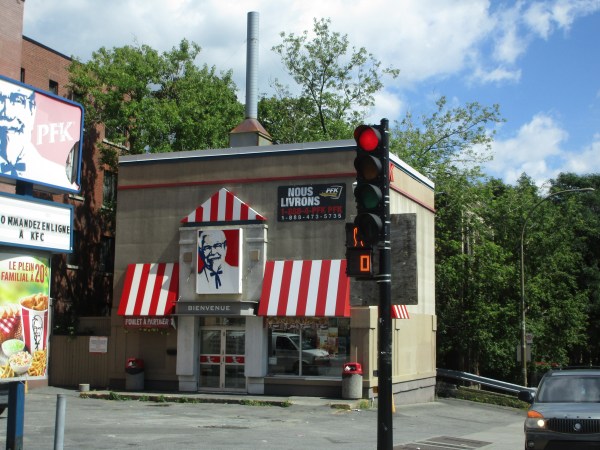
But Montreal’s link to Paris is deeper than just the language. You can see Paris in the architecture, in Notre Dame Cathedral of course, and even in many of the street names. Westmount immediately gave us the feeling of being in a Parisian suburb, and that set a perfect tone for the rest of the day.
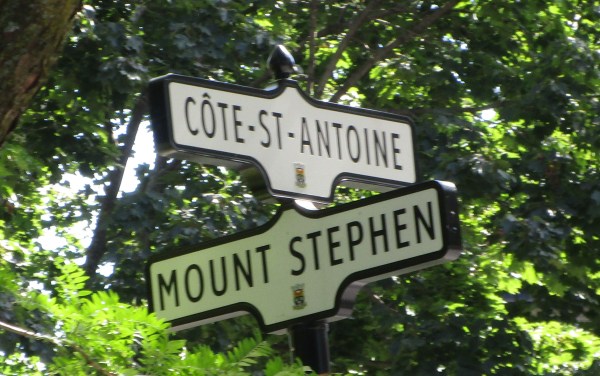


I love Paris, and I loved feeling a little like I was back there. And although my French is lousy it’s good enough that I didn’t feel terribly out of place.
One of the major things that separates Montreal from Paris is Mont Royal, and that’s where we went next.
If the downtown is the heart of the city, then Mont Royal must be Montreal’s eyes. Rising high above the city, Mont Royal is pretty small for a mountain but it’s where the city got its name, and the whole mountain is a gorgeous park known for its winding paths lined with foliage, and for the views of the city at the top.
We found a parking spot at the bottom and started climbing. We chose to skip the winding paths and opted instead for the stairs, which are wooden with thick iron railings, and cut through the trees with little room to spare, making them quite beautiful in their own right. And while the stairs are the most direct route, they’re no shortcut–as we climbed 537 steps, according to Sam’s count.


The walk up to the top was ohmygawd exhausting, especially after all the walking we had done in Ottawa in the morning, but once at the top we were rewarded with beauty everywhere we looked. A stately chalet sits at the top, with a massive stone patio that offers better views than Toronto’s CN Tower or Ottawa’s Alexandra Bridge. Foliage in the foreground, the city rising up behind it, and purple mountains in the distance, with blue skies and fluffy white clouds overhead. Even on a patio packed with selfie-stick-waving tourists, it’s breathtaking.
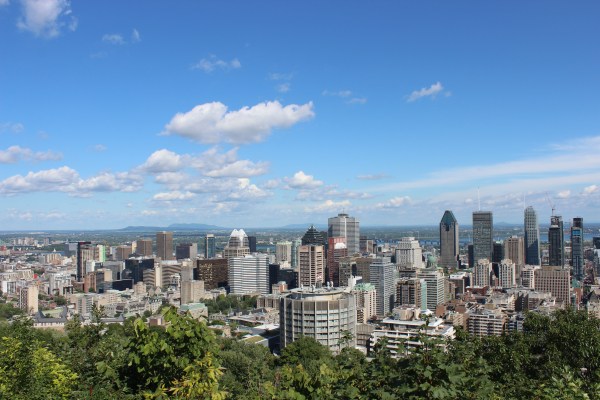
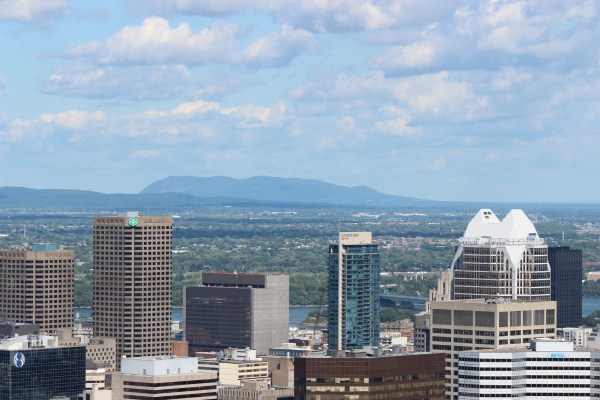
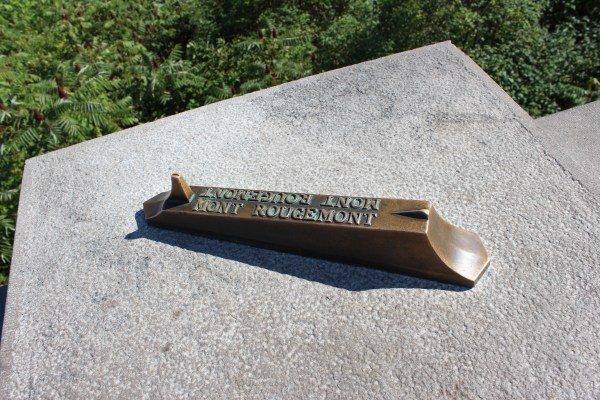
There were two additional touches I really appreciated. First, whoever runs the park thoughtfully added cute little guides telling you what you’re looking at, and did so inconspicuously without detracting from the beauty of the scene. One each pillar of the stone railing along the patio’s edge there’s little bronze rifle sight that’s embossed with what it’s pointing to.
Additionally, sitting on the patio away from the edge is an upright piano that’s one of several scattered around the city, just sitting there waiting for someone to play it. As we took in the view, a young Asian girl played the main music from Super Mario Bros. When she finished, someone else sat down and played Hatikvah, Israel’s national anthem. We ended up seeing a few of these pianos around town today, and each one added a bit to our day.
Once we got our views and made our way back down those 37 steps, it was time for something with a decidedly more urban feel.
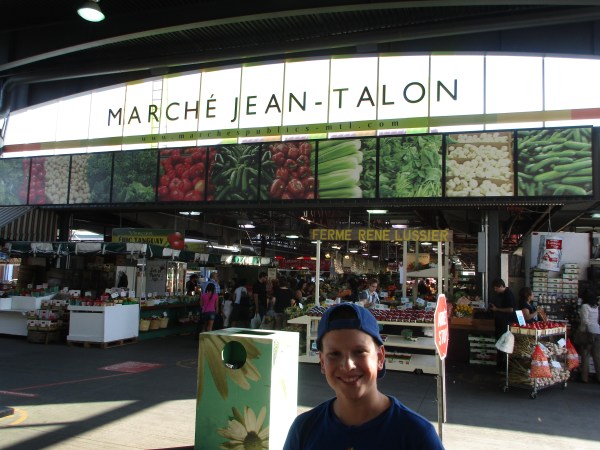
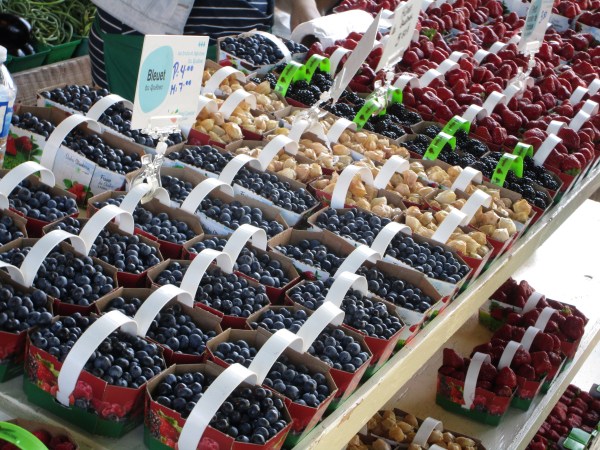
Jean-Talon Market is kind of a cross between an American farmer’s market and a Middle Eastern shuk. It’s more dark and mazelike than a farmer’s market but there’s not nearly as much shouting or shoving as there is in a shuk. Almost all of the stalls are selling fresh produce, though a few sell flowers and some of the shops on the outskirts sell cheese or fish or freshly butchered meats. We didn’t end up buying anything, because they were selling basically the same stuff that we saw in Ottawa, but we had fun wandering up and down the aisles inspecting everything.
We also came across some fun stuff, like the display at one end of the market where popular music played as long as people pedaled the four artistic bikes. One energetic family kept the music going for several songs.

And near where we parked we saw another public piano, this one decorated a bit more interestingly.

So many of the cities we’ve been to don’t bother with stuff like this and just focus on adding bike-sharing programs and scattering a few statues around in strategic spots. That’s all well and good, but a lot of them end up looking and feeling roughly the same. More than any statue or bicycle ever can, little touches like this really help give a city its character.
Parking was bit of a hassle, as was all day long. Montreal’s parking signs are a bit confusing in terms of their placement and because no two signs say the same thing. Also, many blocks are reserved only for residents, and in several places there would be a seemingly random section of the block where nobody’s allowed to park. I lost count of the number of times we’d get all excited about an open spot only to learn that it wasn’t rly open to us.
Parking aside, we had a wonderful afternoon in Montreal, but now it was time for dinner, and we were most excited to indulge in poutine.
Poutine, for those who don’t know, is a French-Canadian delicacy that basically amounts to a plate of French fries smothered in a sort of gravy and sprinkled with cheese curds.
One of the most frustrating things about traveling while keeping kosher is that we rarely get to sample traditional local cuisine. Even when there are kosher restaurants, they tend toward pizza, deli, or falafel regardless of what the rest of the city is eating. But Montreal has several kosher restaurants, and two of them serve poutine. One is a dairy restaurant that serves traditional poutine, while the other is a deli that serves its poutine with chunks of smoked meat instead of cheese.
I’ve only ever had lousy knock-off poutine I was excited to have the real thing in its proper home. Sam had never heard of poutine before yesterday, but when I described it to him he fell instantly in love. Deciding between the two restaurants was easy: we chose the deli, and thus the smoked-meat poutine.
And then we got there and found out that they were out of poutine. They had fries and they had meat, but they were out of the special poutine sauce, and without the sauce it’s just French fries. We still had a delicious meal, but it’s a good thing we saw so much today, because tomorrow we have to make time to head back to the deli once they’re restocked.
All in all it was a pretty great day. We’re still a little upset about the thing with the dog, and my scratched-up door will continue reminding us. But we finally had good weather again, we really enjoyed Ottawa, and we are absolutely loving Montreal so far.
One thing that this trip has been missing at times is the sense of wonder and exploration that makes these trips so magical. We’ve had it here and there–when we rode the ATV, when we went fly fishing, in the Thousand Islands, and even a little bit in Milwaukee–but we’ve also had several days when we basically knew what to expect and got pretty much what we expected. Today we had that sense of wonder all day long, every step of the way.
I can’t wait to do some more exploring tomorrow.
The Haircut
I thought I was so smart.
One of the surprising joys of these road trips has been the need for haircuts along the way, and the sometimes odd or interesting places we’ve gotten them. To this day, the best haircut either of us has ever gotten is the random barbershop we stopped at in Coeur d’Alene, Idaho, on our first road trip. The haircuts we got in the Outer Banks on road trip #2 were pretty good, too.
Today we figured we’d find a place to get haircuts at some point after our visit to the Rock Island Lighthouse, either in Clayton, NY, where the tour company is based, or in Ottawa once we got there.
As we were getting off the boat at the end of the tour, I had a stroke of genius. I took a look at the captain of our boat, and saw that he kept his hair short and neat. So I walked up to him and asked him where I could find a barbershop nearby. He didn’t hesitate for a second, just gave me the kind of clear directions that you’d expect from a boat captain.
A few minutes later we pulled up to an old school barbershop. And when I say old school, I’m not kidding. A sign on the building said it was built in 1852. And the barber, well, my guess is that he built it himself.
Sam was the first to sit in the chair. He told the barber what he wanted. First the barber misunderstood, then refused to believe what we were telling him. He insisted that Sam didn’t need a haircut at all, or at the very most just needed a little trim. It was then that I started wondering how awkward it would be if we would just bail. But I couldn’t bring myself to do it. So we insisted on a thorough haircut, and the ancient barber dropped an F bomb, turned on his haircutting music (oldies, naturally), and got to work, announcing, “I’m just going to do it the way I always do.” So Sam sat there in disbelief while the guy started cutting, and I just hoped that the resulting damage would be fixable by a normal barber.
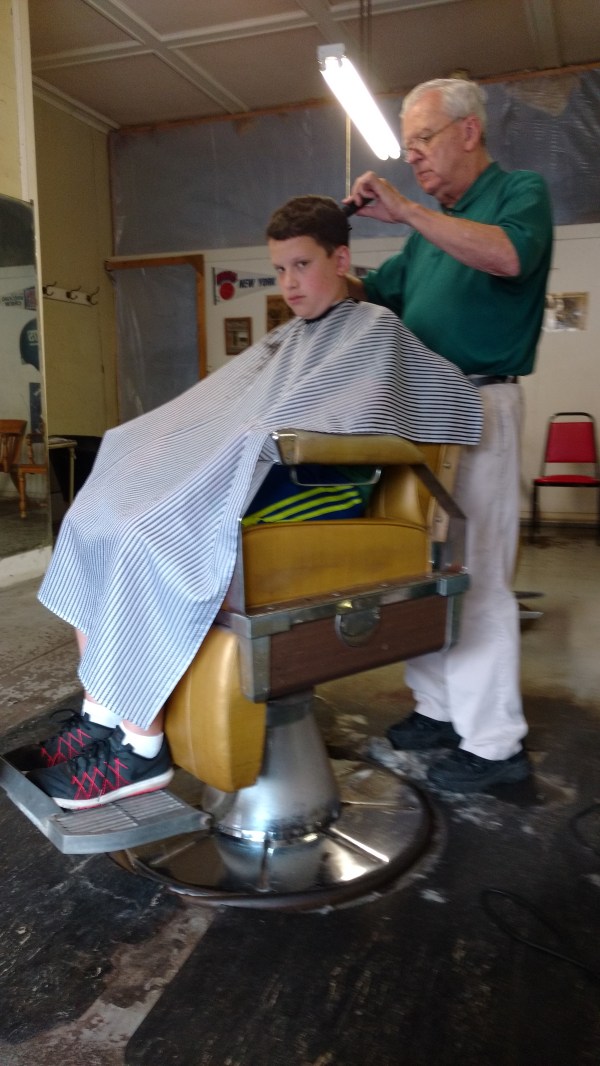
After a little while the barber looked over at me and asked if the top was short enough. I said yes. He barked at me. “Well of course it is! Look how much hair I cut off!”
In the end the haircut wasn’t bad. But I sure as hell wasn’t going to sit in that chair. So I’m hoping to get my haircut tomorrow in Ottawa.
And true to form, we had another memorable road trip haircut.
One Idea, A Thousand Islands
A few days before we left home to start this trip, I had a moment of inspiration. I was on Facebook and an ad came up in my feed from the I Love NY ad campaign for New York State tourism. It was a striking photo of a lighthouse. But it wasn’t just any lighthouse: its stark white color is what made it stand out, but what really got me curious was the fact that the lighthouse appeared to be sitting directly in the water, with only a thin walkway connecting it to the land.

I looked it up. It’s called the Rock Island Lighthouse, and it’s only accessible by boat because that thin walkway connects it to tiny Rock Island. The island is one of the famous Thousand Islands in the St. Lawrence River, which separates a stretch of upstate New York from Canada immediately east of Lake Ontario. I looked at the map with my road trip brain, and I realized that, although the lighthouse wasn’t exactly on our way, it wasn’t terribly far out of our path from Toronto and Ottawa. And visitors can climb to the top. I showed Sam the picture and asked him if he wanted to go. Of course he did. So I made some room in our schedule for the detour and the three-hour boat tour that would take us there and back.
Rock Island Lighthouse instantly became one of the destinations on this trip that I was most excited for. If you’ve been reading this blog since the beginning, you know how much Sam and I love lighthouses (a lot), and how many we’ve visited (a lot)–some just to look at, but most of them to climb inside. All were beautiful, majestic and magical in that way that lighthouses often are, but they were all on land. This one was going to be even cooler.
And after a couple of slightly confusing days driving through a foreign country, I was a little extra excited to be coming back home to New York, even for just a few hours.
I slept terribly all night last night because I kept having nightmares that we overslept and missed the boat. But when we finally woke up this morning, reality was worse: it was pouring. I figured the boat would still go out in light rain, but it was coming down hard. Really hard. I checked the forecast for the rest of the day, thinking that maybe if it cleared up later on we could still take the afternoon tour, even if it meant we’d have to skip Ottawa completely. The forecast said it would start raining even harder at around 11 and continue like that all day. The tour was scheduled for 10:15 till 1 p.m. We were screwed.
Just to be sure, I called the tour company. They said they only cancel when there’s lightning or when the water gets rough, and that the boat has open sides but is covered with a roof, so we should just wear a jacket and come on down. The views certainly weren’t going to be as monumental as I had hoped, but seeing the lighthouse in the rain is better than not seeing it at all.
Packing up the car in a downpour was an adventure, as was getting through customs. (A word of advice: never forget the contents of the cooler right behind your seat when the Customs agent asks you if you have any meat or vegetables with you.) But soon we were on the boat, ready to see our lighthouse.
After all that, the weather turned out to be pretty bearable, as the rain lightened before we embarked and only got really bad again as we were heading back to shore. We had a fantastic time. On the way to the lighthouse we got to see a shipwreck that sits a few feet below the surface, and we got a narrated tour of a large section of the river, with fascinating back stories about all the houses and tiny islands we passed along the way.
We saw beautiful houses of all shapes and sizes.


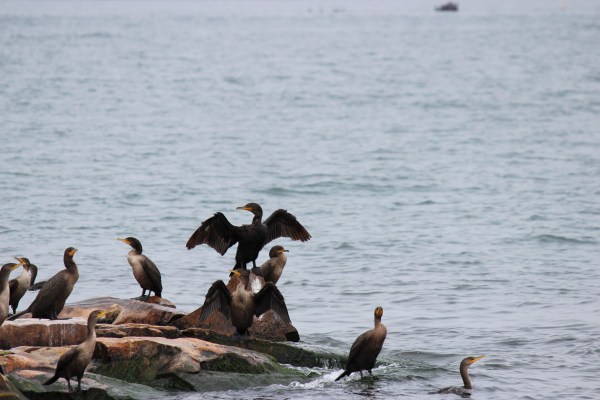
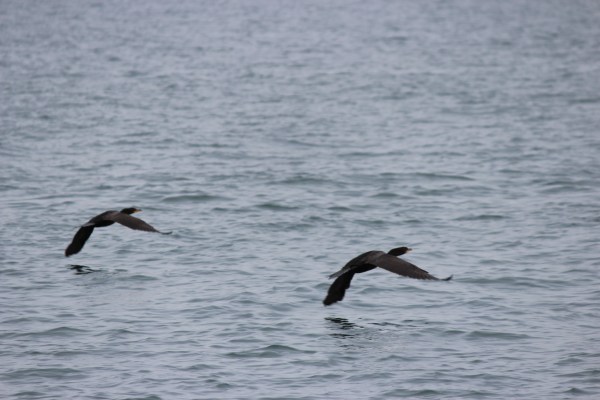
We saw hundreds of cormorants in all states of activity.

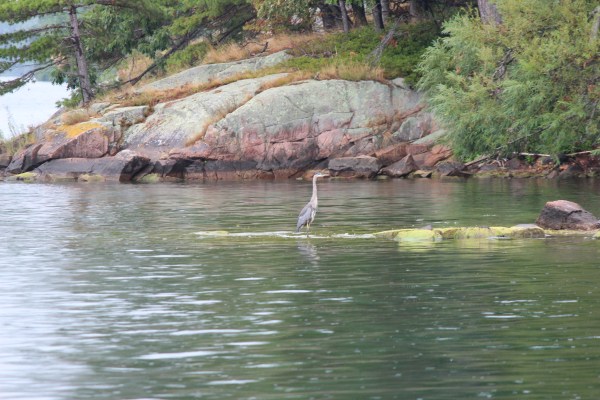
We saw a stately blue heron plotting its next move.
We saw two osprey nests on top of electrical poles.

We even saw the restaurant where thousand island dressing was invented.

It’s the short one in the middle.
And eventually, we saw our lighthouse.

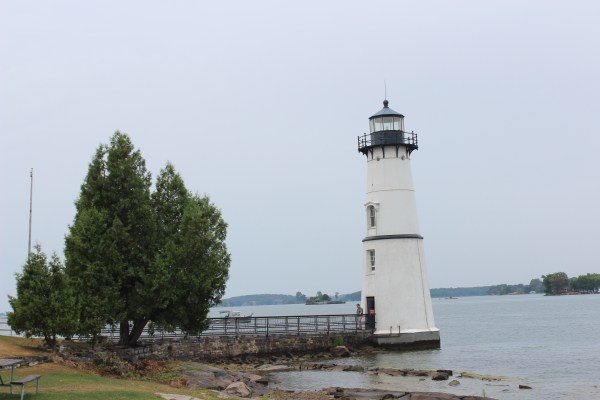

We climbed to the top, of course. And we also decided to redo the I Love NY photo, with one small change: us.

The rest of the day was pretty lousy. We met the angriest and most unreasonable barber in history (more on him in a separate post), we spent an hour and a half driving in a downpour, and when we got to Ottawa we were unable to do anything at all for the rest of the day because it never stopped raining, and everything we want to do here is outside.
But we got our lighthouse. All things considered, this one of the best days of the whole trip.
Oh, Canada!

It’s been more than 20 years since I visited Toronto. The first time I was just here to see a Blue Jays game, so I saw very little of the city other than the CN Tower and the ballpark, which was called the SkyDome back then.
This time, the Blue Jays were out of town, so a ballgame was not an option. We definitely needed to go to the CN Tower observation deck (we’re suckers for observation decks in the sky) and the Hockey Hall of Fame, and we figured we could squeeze in several other sights in the same day. A tour of the Blue Jays’ ballpark, which is now called the Rogers Centre, would make Sam feel a lot better about not seeing an actual game. And when I started researching things to do in Toronto, two things kept coming up everywhere: a castle called Casa Loma, and a bunch of parks. So I added them to our list.
Everything we wanted to see is clustered pretty close together in downtown Toronto except for Casa Loma, so we started there. To say it exceeded our expectations would be a significant understatement.

The castle was built in the early 1900s to be the dream house of a fabulously wealthy Torontonian named Henry Pellatt and his wife. They lived in it for about 10 years before financial ruin forced them out. For a while after that it was turned into a hotel. More recently it’s been used as a set for a whole bunch of movies, most obviously the X-Men franchise but also such wide-ranging titles as Chicago, Cocktail, The Pacifier, and The Love Guru.
I told Sam beforehand that a bunch of movies were filmed there but I didn’t mention which ones. But as soon as we walked in he recognized it as the Xavier Institute for Gifted Youngsters, and what he enjoyed most about it was recognizing rooms inside and scenery outside that were in the X-Men films. The castle’s Peacock Room, for example is the main hallway for the dorms in the movie, and is the backdrop for several notable scenes.
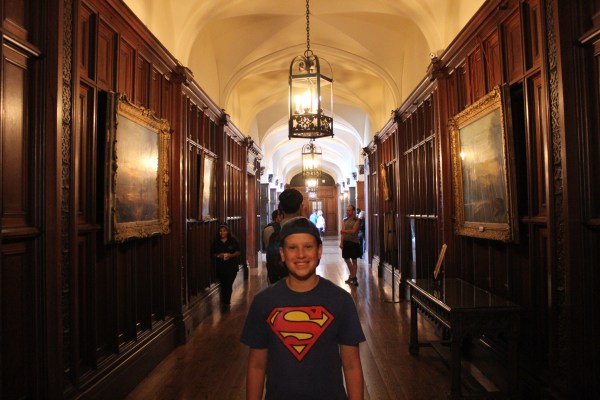
Sam was also excited by one of the first signs we saw when we walked into the castle–a sign that directed visitors to the tunnel. A castle is pretty cool by itself, but a castle with a mysterious underground tunnel is much cooler. He insisted that we explore the tunnel before we even saw the rest of the house.
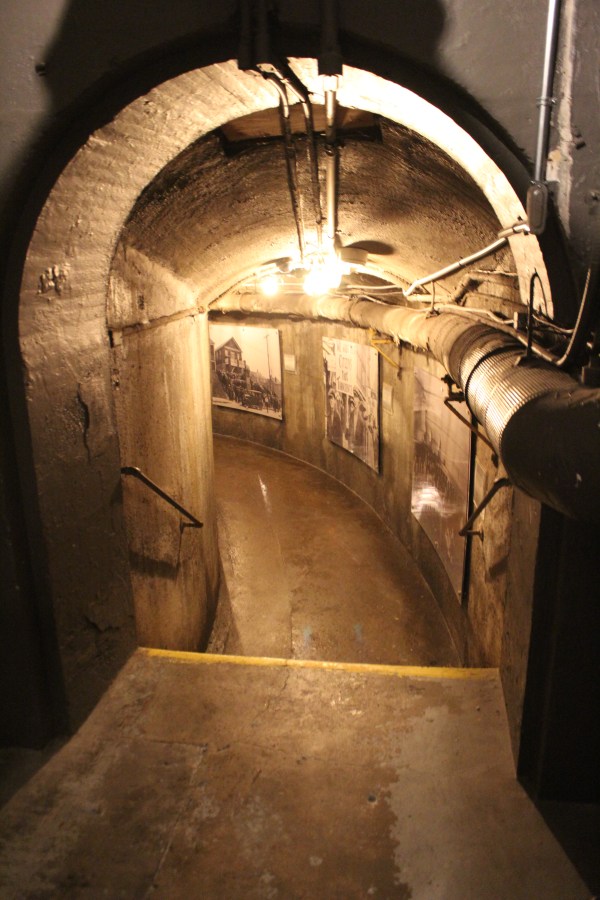
It turns out that the tunnel is more practical than nefarious. The Pellatts’ stables and a few other ancillary buildings are located a few hundred yards (sorry, metres) north of the castle itself, and a city street runs in between, cutting the property in two. Henry Pellatt petitioned the city to shut down that street, but they refused, so he and his staff had to cross the street to get to the other buildings. To avoid having to spend so much time outside in the bitter Toronto winters, Pellatt put in an 800-foot underground tunnel connecting the buildings. Today the tunnel is decorated with a photo exhibit about Toronto’s hardships throughout history, but back in Pellatt’s day it was supposedly decorated much more vibrantly.
We also particularly liked the study, chiefly because it has two secret doors on either side of the fireplace, one of which leads down to the lower level and the other of which leads up to the bedrooms.

Here’s Sam standing in one of the secret doorways
The castle has more than 50 rooms, each one jaw-droppingly ornate and gorgeous. It hosts weddings pretty often, and even more often it’s used as a setting for wedding photos. In fact, we saw two such photo shoots while we were there.

I loved every room, but Sam got a little tired after 30 or 40, so he found a place to sit and chill while I climbed the many, many staircases up to the castle’s highest tower. On the third floor, an unfinished storage room has a plain staircase that leads up to a round brick room, which in turn contains an iron spiral staircase that goes up and up and up until it finally delivers you to a small, round tower with windows that extraordinary views of the rest of the castle, the surrounding neighborhood, and, really, all of the city.


I figured we’d spend half an hour to an hour in the castle, but we were there exploring for more than two hours. By the time we left the place was packed, so we were glad we avoided the biggest crowds by going early in the day.
By then it was almost lunch time, so we decided to take advantage of Toronto’s large Jewish population and the resulting large selection of kosher restaurants. We treated ourselves to a decadent feast that was more of a dinner. (I had ribs and Sam had a chicken pot pie.) While we were in the Jewish neighborhood, we did some grocery shopping to restock our cooler with meat and vegetables.
This was about the time that we really fell in love with Toronto. It’s a beautiful city with a great skyline and parks everywhere–really nice ones, with zoos and fountains and stuff, not just grass. The Lake Ontario waterfront is even nicer than Chicago’s Lake Michigan. The weather today was perfection: high 70s with low humidity and a nice breeze. And driving out of downtown to the castle and the Jewish part of town took us through some great neighborhoods. Our favorite was called Forest Hill, with stunning but not oversized houses and of course plenty of nice parks. It’s pretty close to the kosher food, too. So in the fictional scenario where we move to Canada, that’s where we’ll settle.
Meanwhile, all of this tunnel exploring and feasting and shopping put us hours behind schedule. So we cut a few things from our list, including the parks and a historic downtown neighborhood. There was still time, I figured, for the ballpark tour, the observation deck, and the Hockey Hall of Fame.
We got to the Rogers Centre just in time for the 2 p.m. tour. We’ve been on enough ballpark tours that we’ve become connoisseurs, and compared to the others this one ranked as mediocre. As on all ballpark tours, our tour guide gave us lots of interesting detail about the history of the building and why things are the way they are, and took us to the press room, a luxury suite, and then down onto the field.
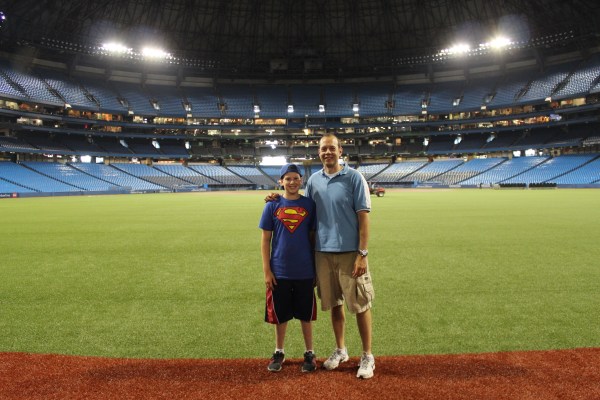
But the tour was missing a walk or even peek into the clubhouse, which the best tours include. We didn’t even get to go into the dugout, which is a staple of these tours and was especially inexplicable because the team is out of town which means the dugouts are sitting completely unused. The roof was closed, too, which seemed silly considering the excellent weather, and it made the stadium a bit dark because they don’t keep all the lights on if nobody’s playing baseball. Also (and this is a much more minor thing), our guide was a nerdy kid who clearly isn’t much of a sports fan; she knew all the material, but along the way there were little tells that she doesn’t come to many games, like when she called the outfield wall “the home run wall.”
The ballpark is literally next door to the CN Tower, so I figured we’d need about an hour or so for the observation deck, including waiting in line to get in. I bought tickets online in advance so we could avoid the ticket counter and head straight for the elevators. Little did I know that we’d spend the rest of the day waiting in line for the elevators.
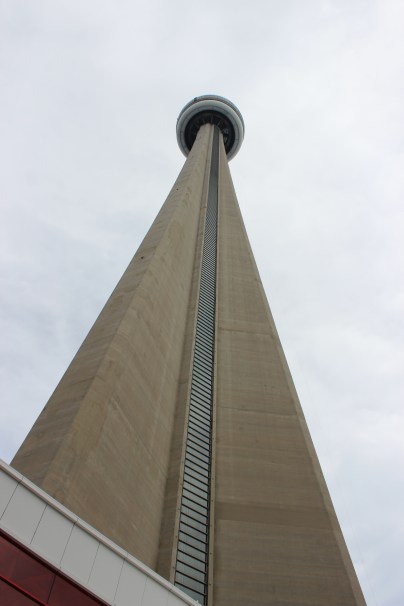
You know those little signs they have at amusement parks telling you how long the wait is from that point? The CN Tower doesn’t have those. And you can’t see one end of the line from the other, so there was never any way to know how long it’d be. We ended up being online for over an hour and a half. It would’ve been nice to have enough information to evaluate the situation and decide whether we wanted to wait on the line or do anything else the entire rest of the day.
It didn’t help that the person right in front of us smelled horrible, and a few families behind us there was a baby that literally did not stop screaming for a second the entire time. I’m all for letting babies cry it out, but my G-d, an hour and a half? You can punch a baby in the face and it will cry for less than an hour and a half. (I mean, I assume. I’ve never actually punched a baby. But I did fantasize about doing so today.)
We had been having a great day up until this point, but it ground to a halt very quickly. By the time we got to the elevator we were so fed up that we almost didn’t appreciate it. Almost.
We did enjoy the observation deck. There’s just something fun about being so high up, looking out onto a tiny little city below you. Sam had fun using our camera’s zoom lens to get close-ups of interesting buildings and sculptures he spotted throughout the city. We also tried to find Casa Loma, but we weren’t able to.
You know what would make the CN Tower a whole lot better, other than a much shorter line? Little signs around the observation deck indicating which notable landmarks you can see from a few different vantage points. I think this is the first major observation tower I’ve ever been to that lacks these signs.
We did have fun, though. And then we had to wait 20 minutes to ride the elevator back down to street level. By the time we got out of there is was almost 6 p.m., which is when the Hockey Hall of Fame closes, so we weren’t able to go.
By that point we were pretty fed up with crowds, so we gave up on Toronto and drove northeast toward tomorrow’s destination. In roughly the amount of time it took us to go up 350 feet to the CN Tower observation deck and come back down, we managed to drive about 180 miles, stop off to grill and eat dinner at a rest stop, and wildly overpay for a tank of gas. (You never really appreciate how cheap gasoline is in the United States until you have to buy it somewhere else. I paid $51 for what would have cost about $30 at home.)
You’d think that our car rides would be pretty boring more than 3,600 miles into our trip, but this one was one of the most fun yet, as we reminisced, shared weird thoughts, and belted all the words to Gloria Gaynor’s “I Will Survive” when it came on (we even coordinated choreography on the fly).
All in all, Toronto was great, even if we didn’t get to everything we wanted to do. But tomorrow we’ve got a very different kind of day planned. I just hope there won’t be any screaming babies.
Speeding in Kilometers
Driving in Canada is surprisingly nerve-wracking. For the most part it’s just like driving at home, but speed limits are in kilometers. This should not be a big deal, as our car, like most cars, has a dual speedometer. The problem is that I have no idea how much over the speed limit I can safely drive without having to be worried about a speeding ticket. At home the general rule of thumb is that cops will spot you 10 mph, so I usually set the cruise control to about 7 mph over the limit. But I have no idea whether I can just multiply that by 1.6 here or if the rules are totally different. I’ve been taking my cues from other drivers, but some of the other drivers are insane, like the guy we saw yesterday who had a basketball hoop in the back of his pickup.
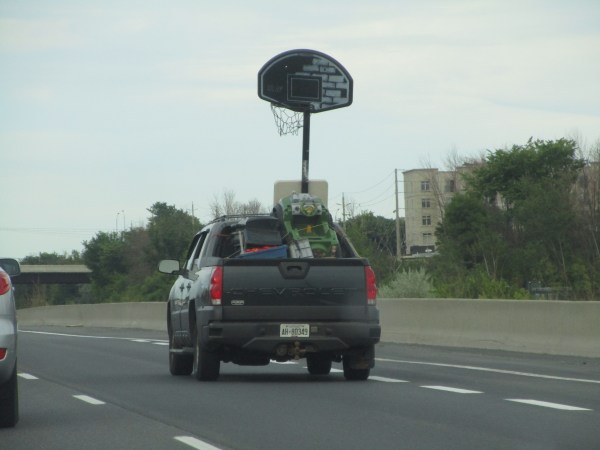
I don’t understand how that thing stayed upright.
And two days ago, we got onto the highway and were immediately greeted by a terrifying sight that made me wonder if I had gotten on the highway backward.
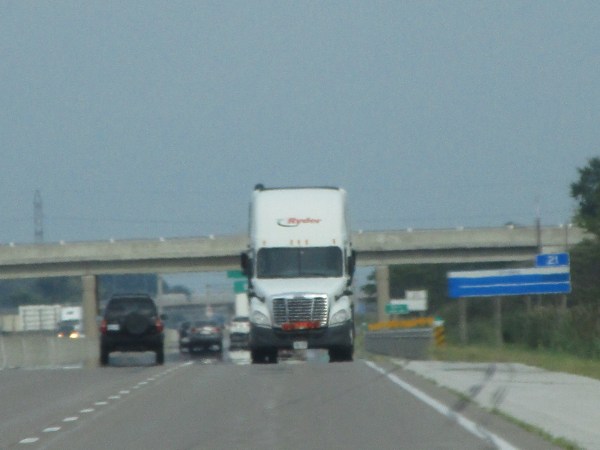
It turned out to be just a truck being towed, but it was still pretty unnerving.
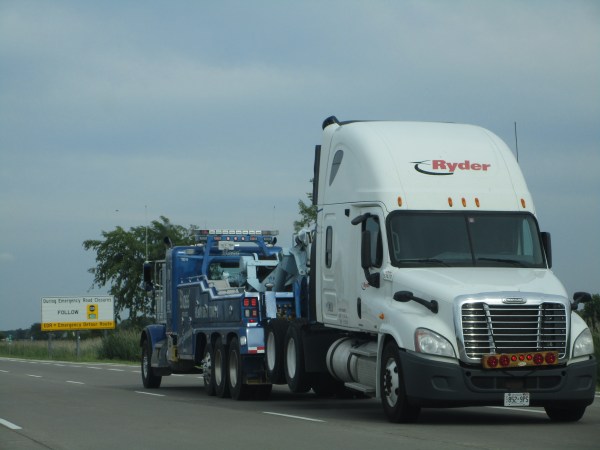
So I’m kind of making up rules for myself as I go along, and hoping that they match up well enough with reality that it’s not going to get us in any trouble.
Fast, Cars
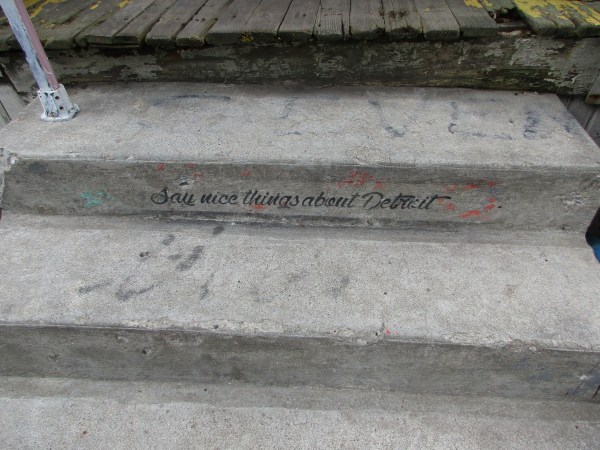
What an odd day Sunday turned out to be.
We knew long in advance it was not going to be an ordinary day because Sunday was Tisha B’Av, a Jewish day of mourning that is observed through the performance of many rituals, the most well-known of which is a full-day fast.
Before the day even started, though, we ran into all sorts of trouble. At about midnight Saturday night I realized that the air conditioning in our hotel room was no longer working. With no maintenance staff available so late at night, the hotel moved us to a different room. We got settled in the new room just before 1 a.m., only to realize that the new room had one king bed instead of two doubles. Sam fell asleep pretty quickly, but it took me hours, and when I finally fell asleep Sam woke me repeatedly by sleeping restlessly, flailing arms and legs into me repeatedly. At one point he actually punched me in the neck.
When we checked out the hotel apologized again and didn’t charge us at all for the night, but the damage was done.
We had planned a pretty ambitious Detroit itinerary, but we were both fasting and I was working on just a few hours of sleep. Needless to say we didn’t get to everything on our list.
Detroit is known for two things: the auto industry, and urban blight. Of the two, we decided to start with cars. Ford factory tours leave from the massive Henry Ford Museum in nearby Dearborn, Michigan, but not on Sundays. So instead we simply explored the museum, which is fantastic. We almost left it off our list, but once we got there we both quickly saw the error of our thinking. If you are ever in the Detroit area, do not miss this museum.
The museum is home to dozens of cars, of course, among many fascinating other exhibits. But the most impressive and interesting are not Fords. We headed straight to the exhibit of Presidential motorcade cars. The most modern of them is Reagan’s Presidential limo, but the real draw is JFK’s convertible–yes, the one he was riding in Dallas when he was shot.
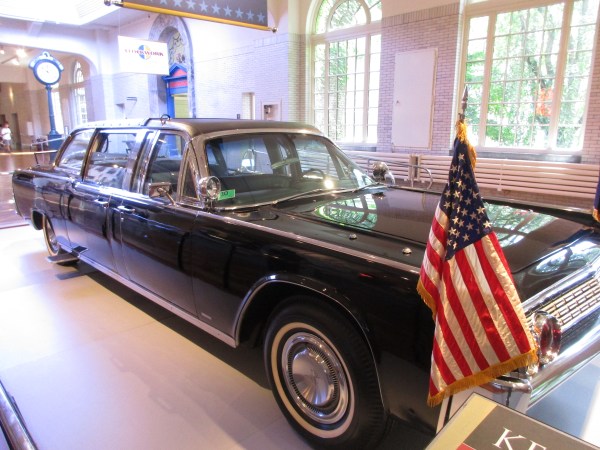
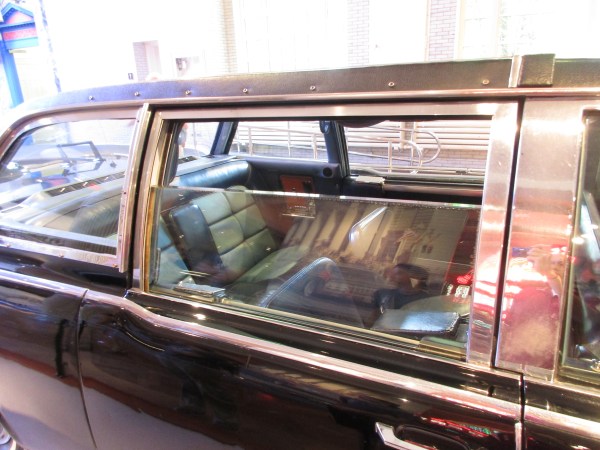
Without necessarily setting out to, we have now been to the spot where he was assassinated, to the book depository where the shots were fired, and to the grassy knoll where other shots were or weren’t fired, and we’ve seen the car he was riding in and walked through the Air Force One plane that brought his body back to Washington.
Other Presidential cars in the museum were Eisenhower’s freaky bubbletop limo that let the crowds see him without touching …

FDR’s ultra-stylish convertible limo …

and Teddy Roosevelt’s horse-drawn Brougham carriage.

There were plenty of other extraordinary cars of all ages, manufacturers, and styles, but the one we got excited for was the 1952 Oscar Mayer Weinermobile.
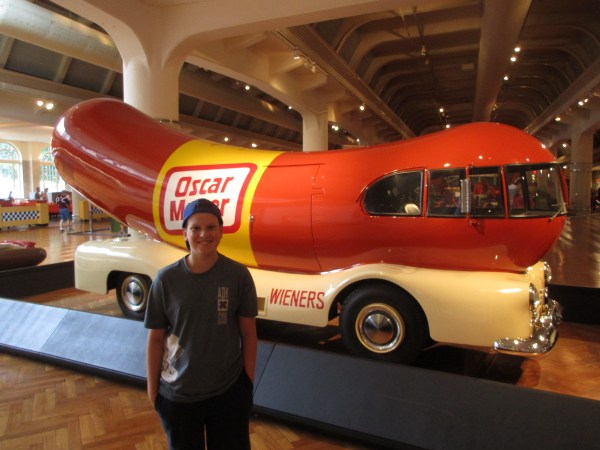
There was actually a whole display about the Weinermobile in addition to the car, showing various vintage memorabilia and even an opportunity to turn yourself into a hot dog, which Sam did enthusiastically.
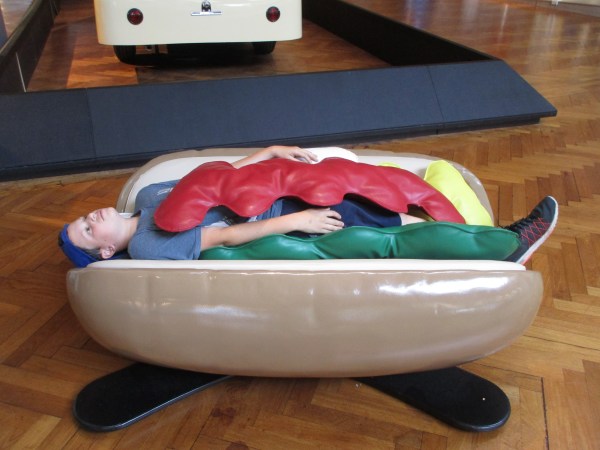
It was about this time when we went to the museum’s huge movie theater to see a 3D movie about one of our favorite road-trip-related subjects, the National Parks. The theater was absolutely freezing and most people in it were munching fragrant popcorn that they bought at the concession stand, but we still enjoyed the movie, especially when it showed cool footage of parks we’ve been to and we could reminisce about seeing the things in person that the rest of the audience was seeing for the first time on screen.
The real highlight came as we were leaving, and we walked past a kid who was maybe 8 or 10 years old saying, “Dad, we gotta travel! We should go on a road trip and see some National Parks!” Sam and I exchanged a knowing look and smiled.
We could have spent all day in the museum, but we had other places to be, so we focused on only a few more things. Of the many interactive exhibits, we chose the one where you can design, build, and test your own paper airplanes.

We rushed through the exhibit about freedom in America, but stopped to spend a couple of minutes in the actual bus Rosa Parks was riding when she got arrested for refusing to give up her seat to a white man.


We each took a turn sitting in the exact seat she refused to give up.
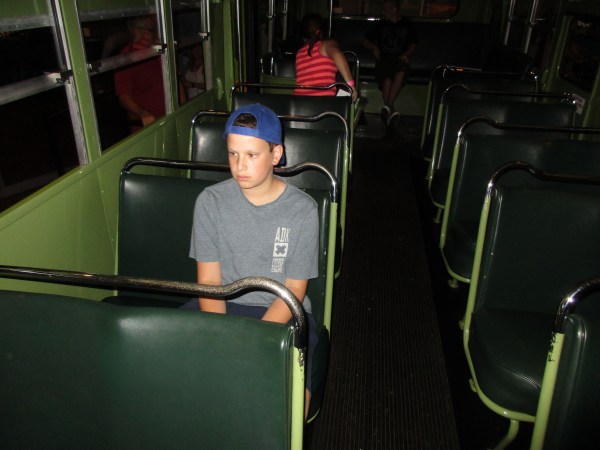
This was especially meaningful after having learned all about Parks and her protest when we visited the Rosa Parks Museum in Montgomery on road trip #2 (hence Sam’s solemn face in the photo).
We then breezed through the exhibit on historic furniture, but I lingered over two pieces that had special meaning to me: the former writing desks of Edgar Allen Poe and Mark Twain.


Having seen the cars, it was now time to see the urban blight. We chose to do this by viewing the Heidelberg Project, a 30-year-old art project that has turned a particularly dilapidated city block (Heidelberg Street) in a particularly poor neighborhood into an outdoor art project. The exteriors of a few abandoned houses on the block have been decorated, and the trees, sidewalks, and empty lots on the block have been largely covered with various pieces of strange artwork.

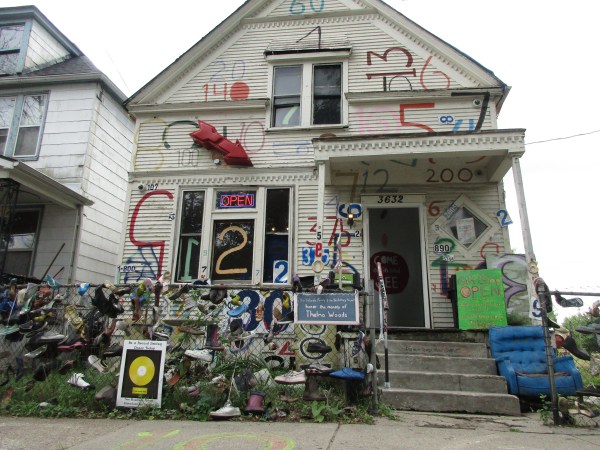
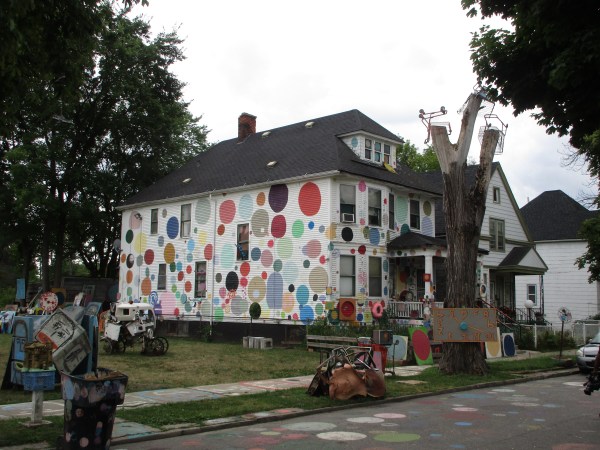


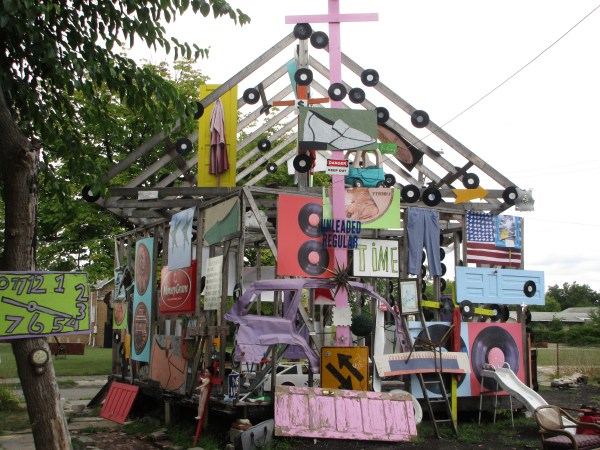


You may have noticed some odd-looking clocks here and there in the photos. That barely scratches the surface, as clocks are clearly an important motif and were thus everywhere.


There are a few houses on the block that are occupied by ordinary residents and are thus not part of the project. One resident has chosen to capitalize on the attention, turning her house into a money-making work of art. She sits on her porch selling cold drinks and encouraging passersby to pay a dollar for the privilege of writing their names on her house, which she calls a living guestbook. I did, of course.
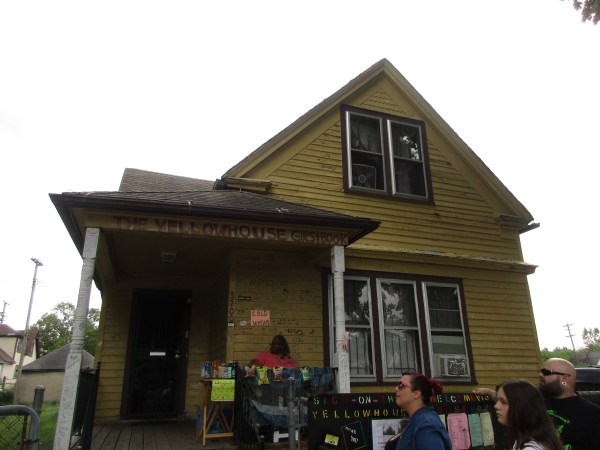
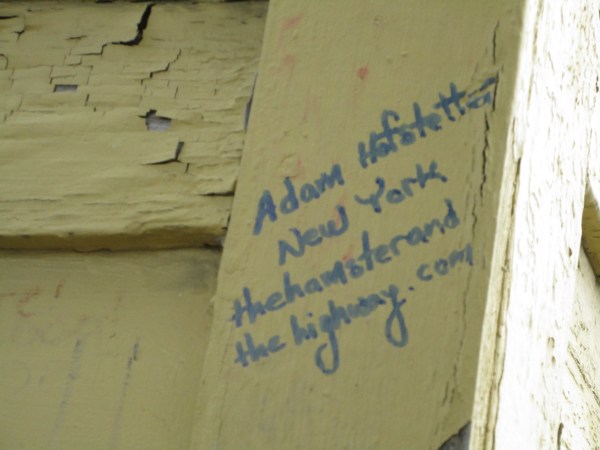
Gotta get that plug in anywhere I can!
Other neighbors are not so pleased with the additional foot traffic and prying tourists.

One guy, named Tim Burke, is a little of both, as he is an artist himself who loudly declares that his property is not part of the Heidelberg Project but has turned it into a similar work of public art.


Sam, having heard about how dangerous Detroit can be, was a bit unnerved by being in such a rundown neighborhood and insisted on staying inside the car while I got out to inspect the art a bit more closely. It’s too bad, because he missed seeing some interesting stuff, as well as the great conversations I had with the Yellow House lady and with the competing artist.
Next up was a more traditional sight-seeing destination: the Motown Museum, located at the site of Berry Gordy’s original house / Motown Records recording studio.
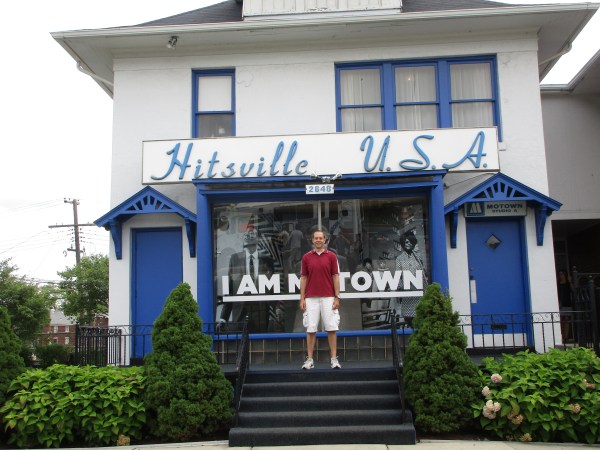

They don’t allow photos inside, so I can’t show you any of the cool stuff like the original furniture, the original vending machine where Baby Ruth bars were always in the same slot so that Little Stevie Wonder could always find his favorite candy bar when he came in for a recording session. The coolest part of the tour was the end, when we went down into Studio A, the original (and untouched) recording studio where every one of Motown’s hits were recorded. Our enthusiastic tour guide, Shantelle, told us about how the only thing that’s changed in the room is the innards of the 1877 Steinway piano, because, when Paul McCartney came for a visit several years ago, he tried to play it but it didn’t work. So he paid to ship it to Steinway in New York and had them refurbish the inside while leaving the outside alone, which took two years and $100,000, but the piano is now back home and in perfect working order. We weren’t allowed to touch it, but we did all join together to sing the Temptations’ hit “My Girl” in the very studio where it was first recorded. We even did the Temptations’ famous shovel walk as we sang, and the other people on the tour wre very impressed that Sam knew all the words.
We had a few more stops planned, but at this point it was almost 5 p.m. and the fast was starting to hit us pretty hard. We had a long drive ahead of us, so we decided to skip the rest of Detroit and hit the road.
There’s a common trivia question about Detroit: If you leave Detroit heading due south, what is the first foreign country you’ll reach? We demonstrated the answer ourselves, driving through the short tunnel into Windsor, Canada.
We are now really in the home stretch, with a few Canadian cities to visit before ending up back in our home state of New York later this week. Despite my fatigue I was able to do a lot of conversion math in my head as we figured out what the speed limits really meant and how much further we had to go. We made it most of the way to Toronto, found a motel just as it was getting dark, and finally had something to eat.
The Road to Hell
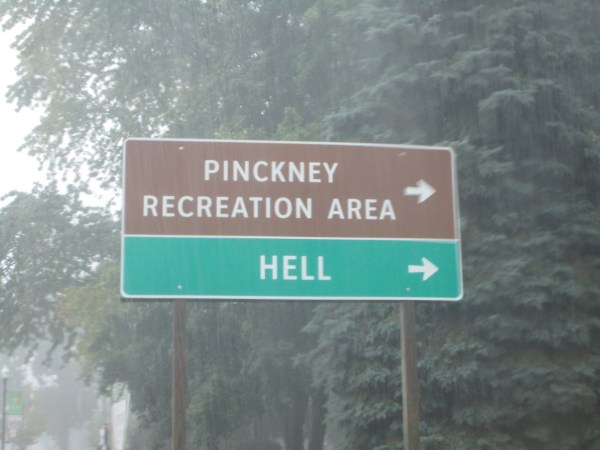
I’m just going to come out and say it: we went through Hell on Friday. But I’ll get to that a little later. Let me start, instead, with paradise.
Indiana Dunes National Lakeshore encompasses what are supposedly the most beautiful beaches in the Midwest, which is kind of like saying that Fargo is the most exciting city in North Dakota. But the sky was overcast and the forecast called for rain, so instead of the beaches we chose nearby Indiana Dunes State Park, which has several scenic hiking trails, most of which lead either to Lake Michigan or to views of Lake Michigan.
We chose the hardest trail. It’s only 1.5 miles long, but most of it is uphill. It’s called the 3 Dune Challenge because the trail takes you up and over the three tallest dunes in the area. The shortest of the three is 176 feet high and the tallest is 192 feet, which may not sound like it’s very difficult to climb until you factor in that, to climb each dune, you have to walk up roughly a 40-degree incline, and you’re walking on sand the whole time. Not compact sand that stays beneath you – the kind of deep, soft sand that shifts the moment you step on it, so when you’re walking up the sandy hillside you take a step up and slide half a step backward. I should probably also mention that the sky was completely gray, the humidity was near 100%, and it was thundering louder and louder as we walked.
Despite the difficulty and the weather, we were all smiles by the time we reached the top of the first dune.

The second peak gave us what would have been a gorgeous view of Lake Michigan if the weather had been a little nicer. You can sort of make out the horizon in the background of this photo:

By the time we crested dune #3, we were completely wiped, our thighs were burning, and we were drenched in sweat. But we made it!
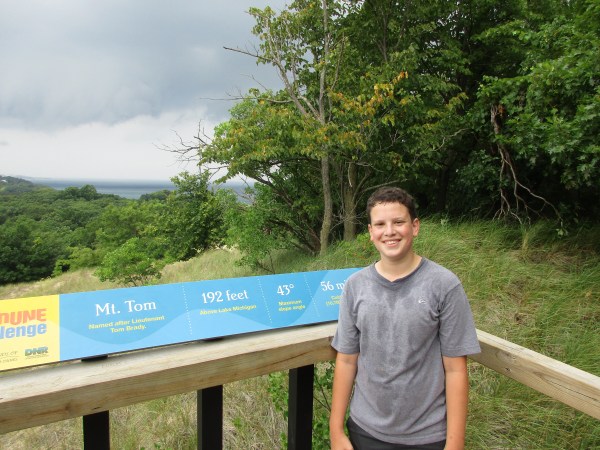
Moments after we started our descent, the rain started. By the time we got back to the car, we didn’t know what was rainwater and what was sweat. But we knew that, after a quick stop at the Visitor Center to collect the congratulatory stickers that they give to the people who complete the 3 Dune Challenge, we knew we’d have more than three straight hours in the air-conditioned car to rest up and dry off.
There’s not a lot to do along the four-hour stretch of I-94 between the dunes and Detroit. Originally we had planned to stop in Kalamazoo to visit their airplane museum, but we were suffering from airplane museum fatigue and decided to skip it. Hunting for something else–anything else–to do along the way, we considered going to see a historic and strangely designed mansion called the Honolulu House in a town called Marshall, but then Sam found an article online called “Michigan Bucket List.” One of the items on the list was to visit a tiny town called Hell, Michigan. So many people over the years have told me to go to Hell that I figured it was time to take their advice. So we jumped onto I-94 East, and we were Hellbound.
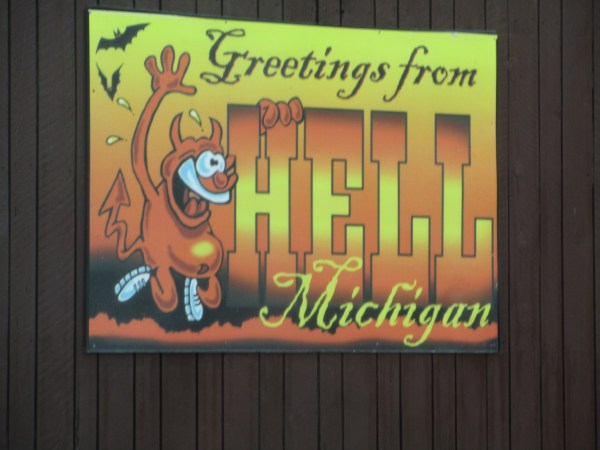
Hell is about 40 miles north of Ann Arbor. Its main street has just a couple of stores, so we didn’t plan to stay long–just long enough to say we’d been to Hell and back.
Some people go to Hell in a handbasket. We went there in a Toyota.
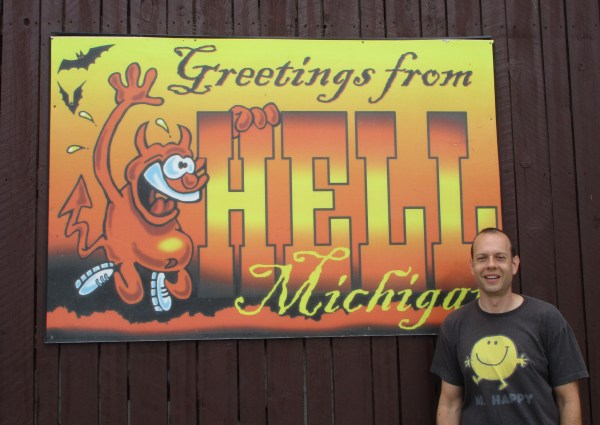
I had a college professor who once told me that the road to Hell is paved with good intentions, but it turns out it’s actually asphalt.
When we got there the rain and cloud cover had dropped the temperature to only 72 degrees so, for mid-August, it was a cold day in Hell.
I made sure to drive especially carefully, because I knew that if I got a speeding ticket I’d have Hell to pay.
Sam and I made far too many corny jokes. We said the local baseball team should be called Hell’s Angels. We talked about starting a business selling fences, and calling it The Gates of Hell. We’d be door-to-door salesmen so we could go around ringing Hell’s bells. We’d start an anger management counseling center called Hell Hath No Fury.” We’d get jobs answering the phones at the 411 call center by announcing, “Hell if I know!”
We stopped at the Hell post office so that I could send Abby a postcard. “Welcome to Hell,” said the guy behind the counter. Not only did he officially stamp the postcard with the name of the town, he even set the edge of it on fire for a few moments so there’d be no mistaking that the postcard came from Hell.
The post office is inside an ice cream and souvenir shop. You think you’re tough? We went to Hell and ordered ice cream.
It had been raining, but as I finished my ice cream, the rain stopped. “Let’s go,” I said to Sam, but he was only halfway through his cone and asked if we could stay a few minutes longer until he finished. I relented. A minute later, the skies opened up and the rain started pouring down in one of those furious summer rainstorms where the streets begin to flood almost immediately and standing outside for three seconds is like having a bucket of water dumped on you. Those storms always lighten up within 10 or 15 minutes, so when Sam finished his ice cream we waited inside for a few more minutes, but the rain showed no signs of stopping. Pressed for time, we made a run for the car, which was just a few steps away from the door. By the time we got in and closed the car doors, we were thoroughly drenched down to our socks.
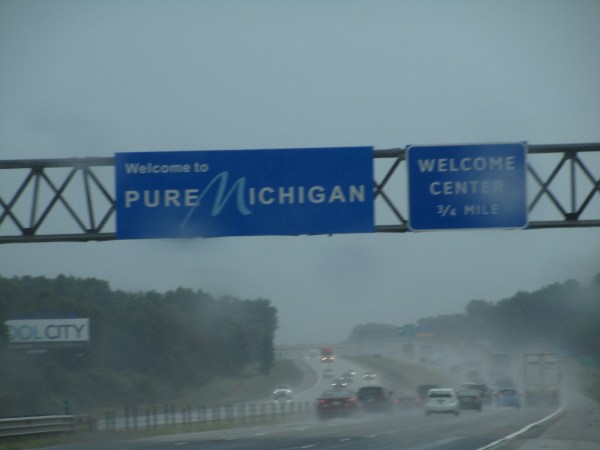
We had lost an hour earlier in the day when we crossed into Michigan, and our arrival in Detroit was going to cut it much closer to the Sabbath I wanted. I would have torn out of there like a bat out of Hell, but the sky was totally black, a thick fog covered everything, and the rain was coming down so hard that I could barely see. I didn’t have the luxury of waiting out the storm, so I crawled through the streets at a snail’s pace, but even so I was terrified. Unfamiliar territory + winding country roads + slick roads and flooding + zero visibility = danger and fear.
We inched our way to the interstate, but the rain seemed to following us, and showed no signs of stopping. It was literally the rainstorm from Hell. Every time it seemed to be calming down for a few seconds, it would come back even harder. The speed limit on the highway was 70 but nobody was going more than 40 or so, and even at that speed I was pretty scared. It continued that way for an hour.
Eventually we reached the edge of the storm. The rain slowed, the sky brightened, the fog lifted, and we picked up speed.
As we got closer to Detroit, it was clear that another storm was brewing. I was hoping that we’d beat it to our hotel and be able to unpack the car and get inside before getting soaked again, but it didn’t work out that way. By the time we were safely in our room, we were dripping yet again, all our stuff was wet, and we had less than half an hour to get our food heated up, take showers, and get everything set up for the Sabbath. It was completely frantic, but Sam was super helpful, and we just barely got it done. Finally we could relax in comfort and safety.
It was one Hell of a day.
 The Hamster and the Highway